Kategorie: eng

  • Layer Performance

    Team
    ,

    The Aachen-based start-up Layer Performance develops and markets intelligent slicing software for generating three-dimensional toolpaths for all material-extruding systems in the field of additive manufacturing. The software addresses the issues associated with conventional additive manufacturing, in which two-dimensional layers are applied consecutively, resulting in rough surfaces and low component strength. Layer Performance’s non-planar slicing software enables the 3D printing of components to a previously unattainable standard of quality. This allows components with smooth free-form surfaces and significantly enhanced mechanical properties to be produced, whilst simultaneously reducing material and energy consumption. By printing directly onto existing components, the gap between traditional mass production and 3D printing processes is bridged.

  • Manugy

    Team
    ,

    manugy is a spin-off from Fraunhofer IPT in Aachen and Fraunhofer FFB in Münster. The start-up develops and sells modular, small- to medium-scale, highly automated production lines for energy storage systems, with a particular focus on battery technology. To this end, manugy combines product, process, and machinery and plant expertise to enable customers to manufacture high-quality next-generation battery cells sustainably. The production lines consist of mini-environments whose environmental conditions can be adapted for battery cell manufacturing. The manufacturing processes, tailored to battery cell technology, are integrated into the mini-environments via modular platforms. Subsequent adaptation of the production lines is possible with minimal effort, allowing for a flexible response to demands in the battery market.

  • MechSyn

    ,

    The production of high-performance materials poses significant challenges for sustainability. These include the generation of toxic chemicals and waste, and a high demand for solvents. Furthermore, high temperatures and pressures are required, leading to high energy consumption. MechSyn, a spin-off from the MPI for Coal Research in Mülheim an der Ruhr, overcomes this problem by using special ball mills in which the materials introduced are subjected to mechanical forces, thereby triggering chemical reactions without the use of solvents or increases in temperature and pressure. This results in a significant increase in efficiency compared to conventional methods. The purely electrically powered mechanochemical process enables the synthesis of new materials with improved properties, such as a larger surface area, greater stability or a longer service life.

  • Octo

    Team
    ,

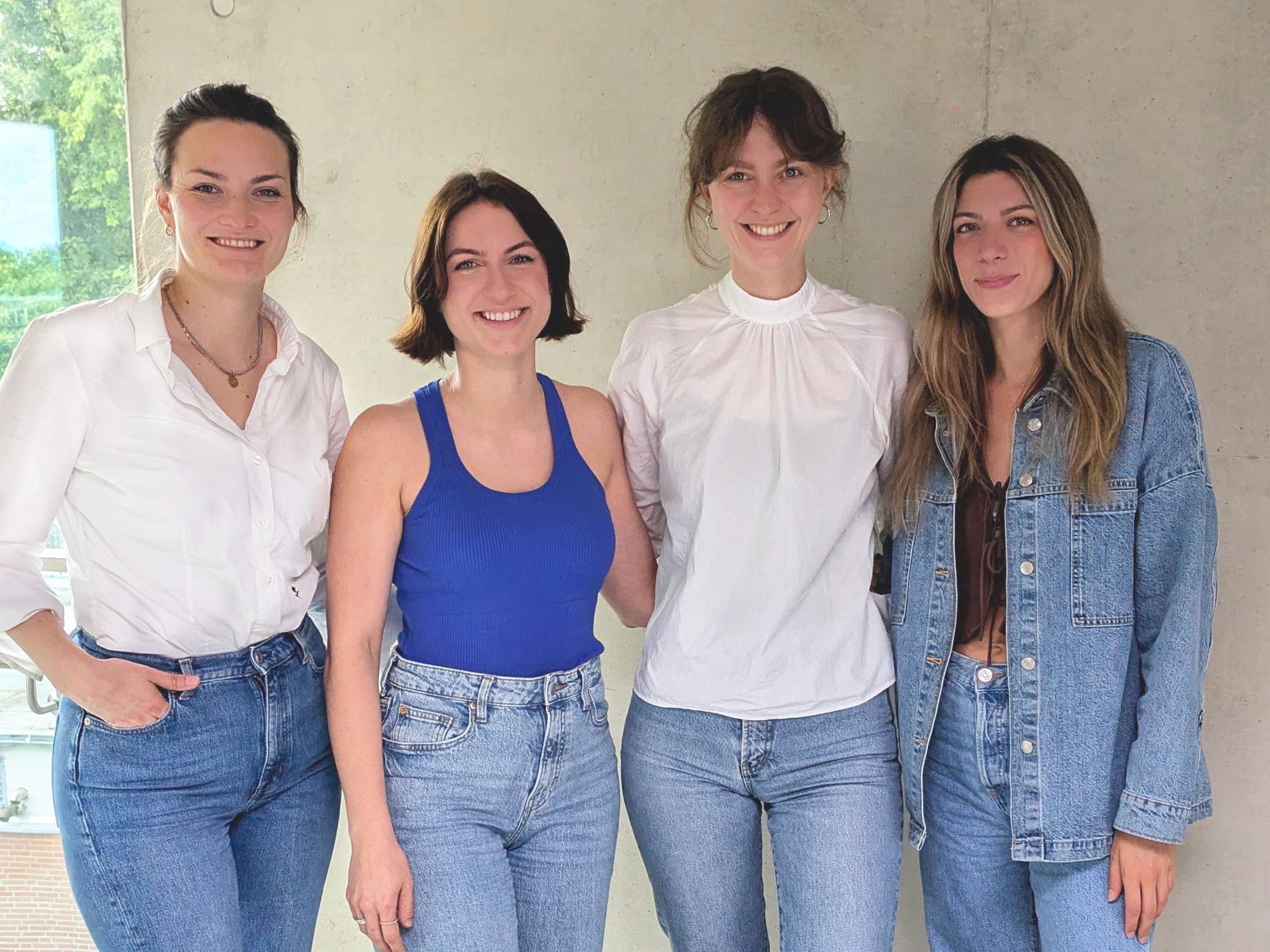
    At present, many water-repellent textiles are made from blended materials, sometimes using chemicals such as fluoropolymers, and are therefore not recyclable. The three-person all-female founding team at Octo has therefore developed a technology that makes it possible to produce water-repellent and breathable fabrics without the use of fluoropolymers. A key feature is the Octo yarn’s water-repellent nature, which means the fabric remains dry even when submerged. It also reduces friction and provides thermal insulation. The Octo yarn is a circular monomaterial, made from recycled materials and can also be recycled again at the end of its life. It is suitable for use in numerous applications, such as outdoor clothing or technical textiles.

  • Power2Polymers

    Team
    ,

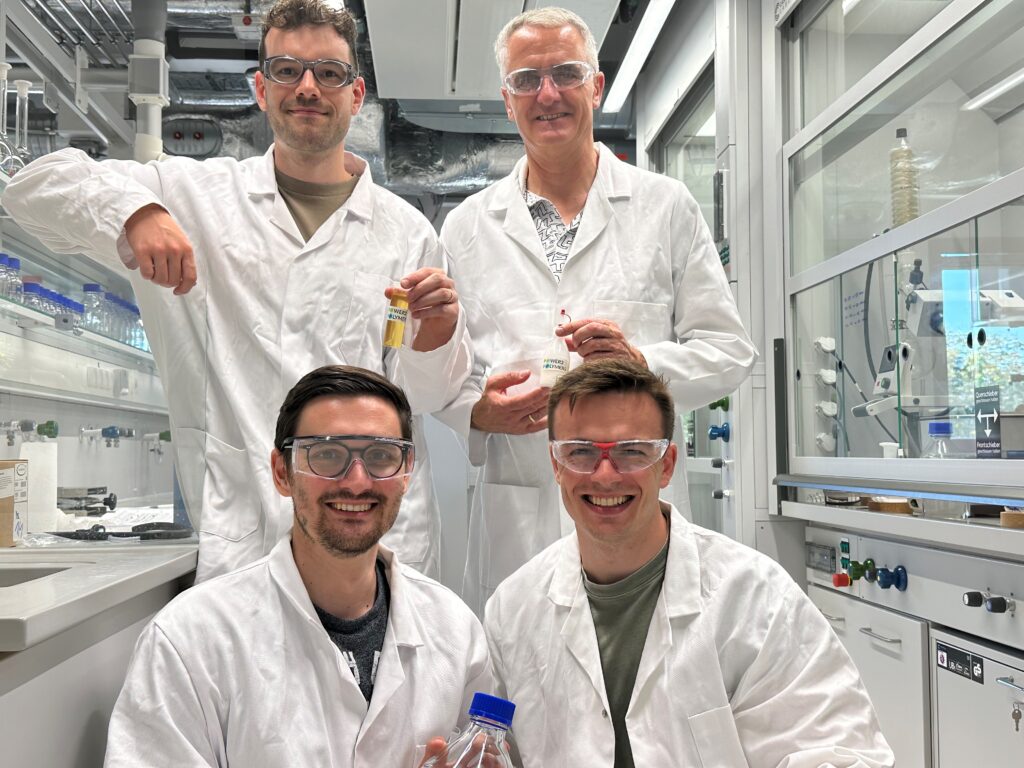
    Power2Polymers, a spin-off from RWTH Aachen University, has developed an innovative technology for the production of cost-effective, sustainable and high-performance polymer products for specialist applications such as lubricants, industrial adhesives and sealants. The technology is based on the integration of a novel building block called POM into base polymers. Protected by a broad patent portfolio comprising eight patent families, the resulting materials offer performance advantages such as improved material compatibility and a CO₂ footprint approximately 40% lower than that of reference materials. They are recyclable, and the POM building block can be derived from renewable raw materials. Furthermore, they have the potential to serve as a sustainable alternative to per- and polyfluoroalkyl substances (PFAS), the ban on which is currently under discussion in the EU and the US due to health and degradation risks.

  • SA-Dymamics

    Team
    ,

    SA-Dynamics manufactures recyclable, high-performance insulation textiles made from bio-based aerogel fibres. These are intended to replace the insulation materials currently in use, such as polyurethane or polystyrene, which are derived from fossil fuels. The aerogel textiles consist of over 90 per cent air and can be processed on conventional textile machinery. They offer outstanding thermal insulation, are extremely lightweight and fully biodegradable.
    The primary target markets are the textile industry (clothing, personal protective equipment) and the construction sector (thermal insulation). In the long term, the aim is to establish a platform technology that opens up further fields of application in the areas of mobility, aerospace, hygiene/medical technology and high-temperature technology.

  • snap Discovery

    Team
    ,

    Human-machine interfaces have evolved significantly in recent years, yet their design remains very
    limited. Keyboards, mice and controllers are still the primary means of interacting with computers, and computer games in particular. These technologies are not intuitive and are of limited use to people with physical disabilities. snap DISCOVERY has therefore developed an AI-enabled brain-computer interface headset and uses advanced neurotechnology to analyse brain activity in real time and control computer games with specific commands using brain activity alone. This allows actions to be performed simply by thinking whilst playing, without having to pick up a controller.

  • AEsy

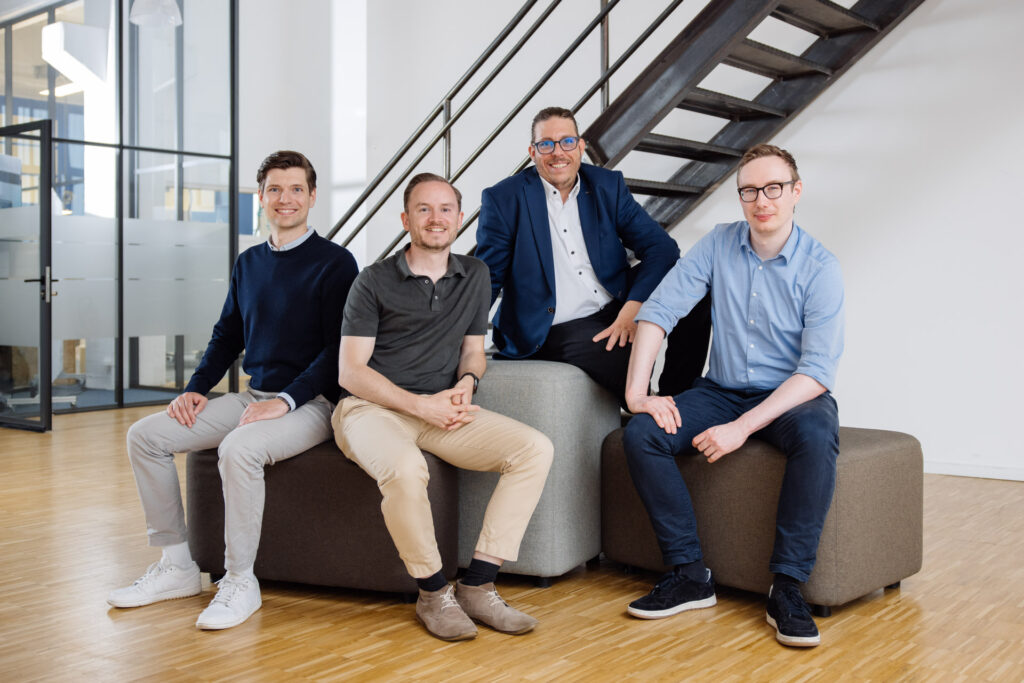
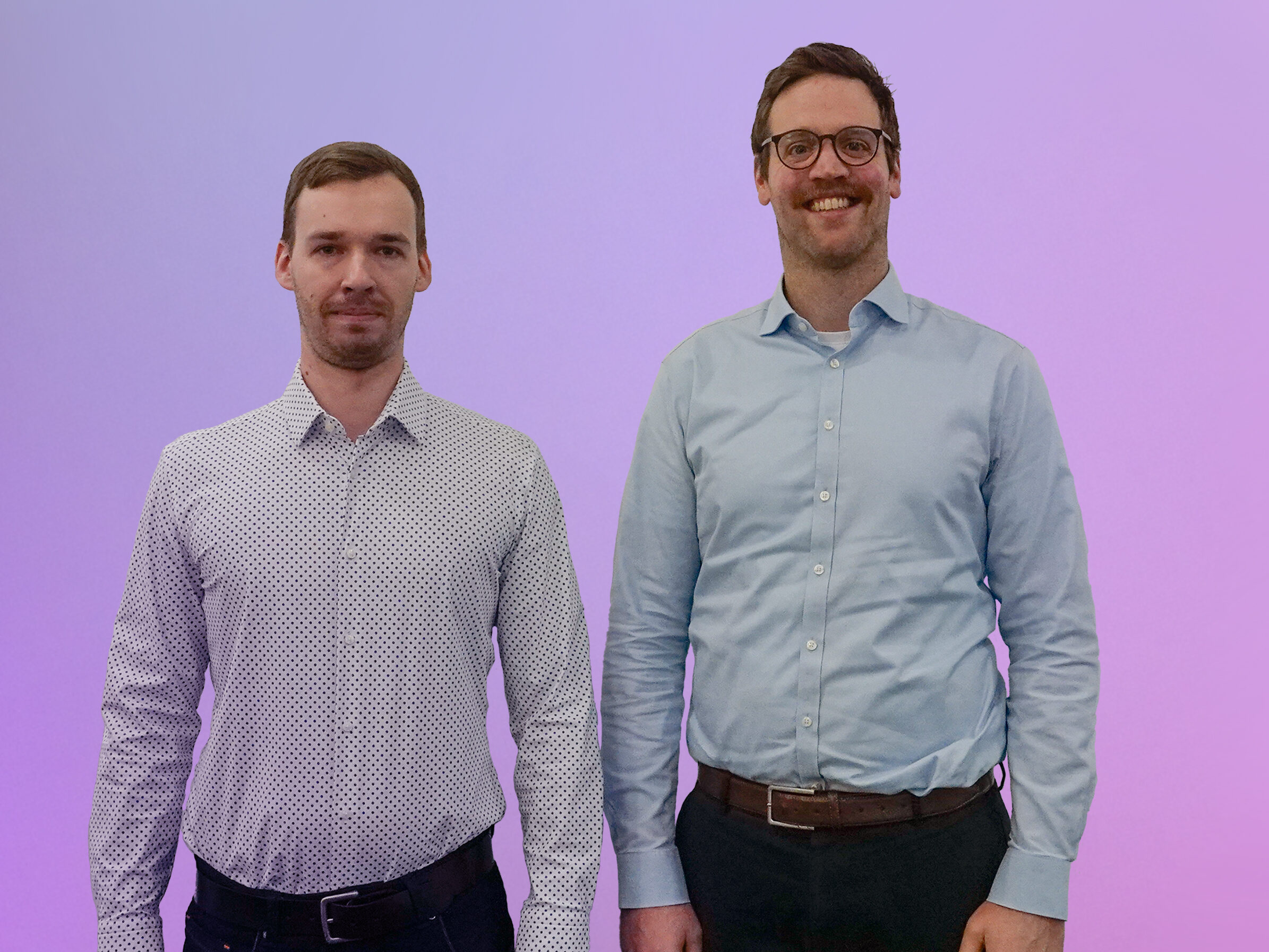
    Founders from left Florian Wirsing, Dr.-Ing. Florian König
    ,

    The RWTH Aachen spin-off AEsy combines acoustic emission technology with intelligent data analysis based on machine learning, offering the first condition monitoring system for the early detection of wear and damage in plain bearings in wind turbines. The system extracts relevant condition parameters that indicate the risk of spontaneous failure in plain bearings. This enables early intervention in the plant control system, preventing spontaneous failure and extending the service life of the plain bearings and, consequently, the entire plant. AEsy offers a Condition Monitoring-as-a-Service solution that actively links continuous condition monitoring based on acoustic emission technology with the plant control system.

    The 12-week HIGH-TECH.NRW Accelerator programme has proved to be extremely valuable and helpful for us. In particular, the interdisciplinary team of mentors supported us with in-depth specialist knowledge and practical expertise. We were able to pursue our goals independently, whilst at all times drawing on the strong network and engaging in dialogue with the other teams. The inspiring interactions and continuous support have significantly advanced our development. Many thanks to the team of mentors and the programme managers of the HIGH-TECH.NRW Accelerator.

    Florian Wirsing

  • Biosensor Engineering

    Founder Dr. Roman Vitushinsky
    ,

    Biosensor Engineering GmbH, based in Bochum, develops GaN sensors for point-of-care diagnostics and personalised medicine, which enable highly sensitive quantitative protein analysis as well as measurements of extracellular and intracellular signalling pathways, delivering results in a very short time. In future, these biosensors are expected to enable €5 breath tests in less than one minute, delivering diagnoses that are just as reliable as a PCR test, which takes 15 minutes for the same diagnosis and costs around €120. The primary target markets are human and veterinary in vitro diagnostics, as well as the pharmaceutical industry.

  • FORMeat

    Co-Founder Dr. Ekin Akdere
    ,

    Cultured meat – that is, meat produced from animal cells grown in a laboratory – is regarded as a promising alternative to conventional meat production. However, high costs, scaling issues and the need to realistically replicate the texture of meat have so far stood in the way of widespread market introduction. This is where the FORMeat team from RWTH Aachen University comes in with a patented process. Using fibre spinning technology, the researchers produce fine, thread-like structures from animal stem cells that mimic the tissue of muscle cells.

    Despite our busy schedule, the program was designed with remarkable flexibility, allowing us to fully engage without compromising our other commitments. We gained valuable insights through numerous expert talks and built a strong network of connections. The program manager was incredibly patient and consistently provided thoughtful guidance and warm introductions to key contacts. We’re grateful for the support and inspiration this experience has given us.

    Rahman Omidinia Anarkoli