Author: Natascha Elsner

  • House of Plasma

    House of Plasma optimizes production processes using plasma based on proprietary, innovative measurement technology (Multipole Resonance Probe – MRP). Our market spans applications ranging from eyeglass lens coating to the manufacture of state-of-the-art computer chips. By utilizing our sensor and control technology, we can reduce resource consumption and process times, enhance product performance, and thereby increase our customers’ return on investment.

    Der Accelerator war für House of Plasma ein großer Erfolg. Wir konnten uns in vielen strategischen Fragen beraten und die eigene Planung anpassen. Dazu gehört z.B. die Business-Planung inklusive der Markteintrittsstrategien und des Finanzierungskonzepts. Auch technische Komponenten, das IP-Management und der Vertrieb wurden mit Hilfe von Mentorinnen und Mentoren weiterentwickelt. Insbesondere die industrielle Nähe des Programms und die technische Expertise für den Markt haben enorm geholfen. Das Team mit Maria, Geoffrey und Moritz bedankt sich herzlich für die tolle Organisation und die noch anhaltende Zusammenarbeit!

    Dr. Moritz Oberberg

  • LIDROTEC

    LIDROTEC is developing a laser system for the high-precision cutting of high-tech materials, such as cell phone displays and microchips. The laser system combines ultrashort-pulse laser processing with the controlled use of liquids, enabling it to cut faster and more precisely than conventional techniques. Reduced scrap, narrower cut widths, and faster processing are revolutionizing the manufacture of resource-intensive and costly high-tech products.

  • Midel Photonics

    Midel Photonics is making laser beam shaping in material processing fit for the future. We develop high-quality beam-shaping elements that, thanks to our unique technology, are particularly cost-effective and always tailored to the application. This helps conserve valuable resources in manufacturing processes across key sectors such as automotive, displays, semiconductors, and clean energy.

    Im Accelerator konnten wir uns mit den verschiedensten Themen wie Markteintritt, Geschäftsmodell über IP bis hin zum Vertrieb intensiv auseinandersetzen und haben viel Feedback von den MentorInnen bekommen. Hinzu kommt der praxisorientierte Austausch mit den anderen Start-ups. Einzigartig an HIGH-TECH.NRW ist sicher auch, dass im Kreise der MentorInnen Branchenfachleute sind, mit denen man über ganz konkrete Perspektiven und Absatzmärkte der eigenen Technologie diskutieren kann. Die Teilnahme hat einfach Spaß gemacht und wir können nur jedem hardware-basierten Start-up in NRW empfehlen sich im nächsten Jahr zu bewerben.

    Dr. David Dung

  • Nanonium

    With its compact laboratory machine, Nanonium (formerly AutoProNano) aims to make colloidal nanoparticles available quickly, easily, and reproducibly at the touch of a button. The prototype of the machine will be developed to market readiness by the end of 2021 as part of an ERDF project at the University of Duisburg-Essen.

    Wir freuen uns, dass wir beim ersten Hightech-Accelerator NRWs dabei sein durften. Das große und diverse Netzwerk von Experten, aber auch der Austausch mit anderen Hightech-Startups haben uns am kompakten und effizienten Programm des Accelerators am besten gefallen. Ein echter Gewinn für NRW!

    Dr. Friedrich Waag

  • NeutronStar Systems

    Neutron Star Systems is paving the way for an electric future in the space industry. By integrating the latest high-temperature superconducting technology into electric propulsion systems, we can carry out missions with high power requirements. Our product offers increased operational flexibility, scalability, and thrust efficiency and can be adapted to a wide range of mission scenarios. These unique features translate into cost savings of millions of euros for our customers through reductions in propellant mass. Our goal is to revolutionize global space exploration ambitions and enable the next step in space research. As a market-leading startup, we stand for innovation, creativity, and commitment.

  • Pixel Photonics

    Pixel Photonics combines integrated optics and superconducting electronics to create ultrafast, highly sensitive light detectors as the basic building block for optical quantum technologies and innovative applications in microscopy.

    The Accelerator allowed us to make many interesting contacts and gave us another push in evaluating our business model!

    Nicolai Walter

  • Qubeto

    qubeto is a hardware and software company that provides tools for analyzing the behavior of microorganisms. In addition to our FIMTable and the accompanying FIMTrack software, we develop other customized hardware and software solutions based on the latest computer vision algorithms to address our customers’ specific challenges.

  • smartGEP

    smartGEP aims to develop and market a plug-and-play package for gas pressure reduction and decentralized power generation based on a sustainable concept. The package’s operating principle is based on a patent-pending process for harnessing renewable energy sources at low temperature levels (e.g., under ambient conditions).

  • Simplyfined

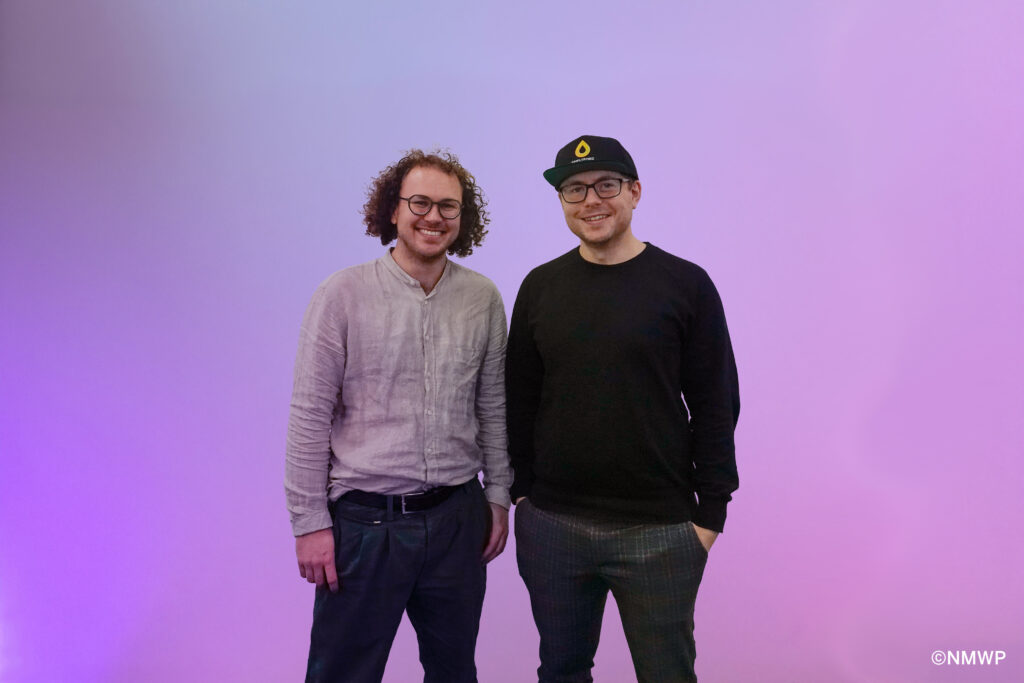
    Co-founders f. l. Max Krause, Jens Ehlhardt
    ,

    Many products in the chemical industry are made on the basis of fossil raw materials such as crude oil and natural gas, but their use is harmful to the climate and also irreversibly consumes finite resources. The spin-off Simplyfined from TU Dortmund University has now developed a catalytic process for the first time that can be used to achieve selective partial hydrogenation of polyunsaturated fatty acids from vegetable oils to monounsaturated. This means that vegetable oils from e.g. rapeseed, soy or sunflower can be used as sustainable basic chemicals for a variety of downstream applications in the chemical industry, e.g. plastics, lubricants, cosmetics or pharmaceuticals.

    Taking part in the HighTech.NRW programme was a real boon for Simplyfined. Over the course of the twelve weeks, we not only benefited from the vast range of volunteer mentors with impressive expertise, but also gained access to a strong industry network. The interaction with the other participating teams was particularly inspiring – an environment that truly fosters innovation.

    Max Krause