Category: Batch #9

  • Smart Plastify GmbH

    Team

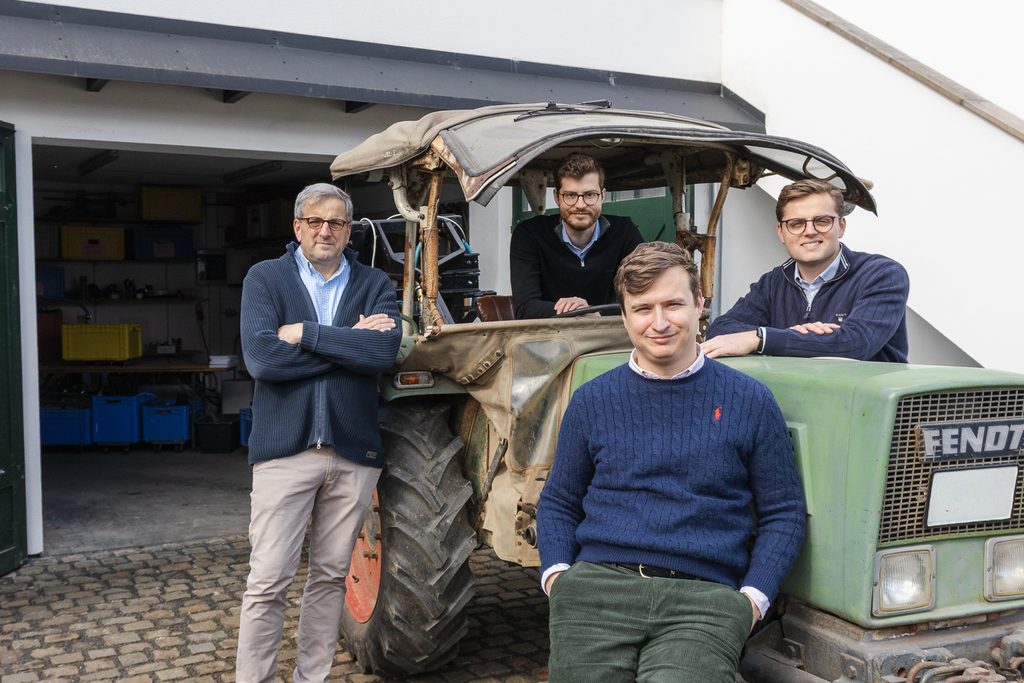
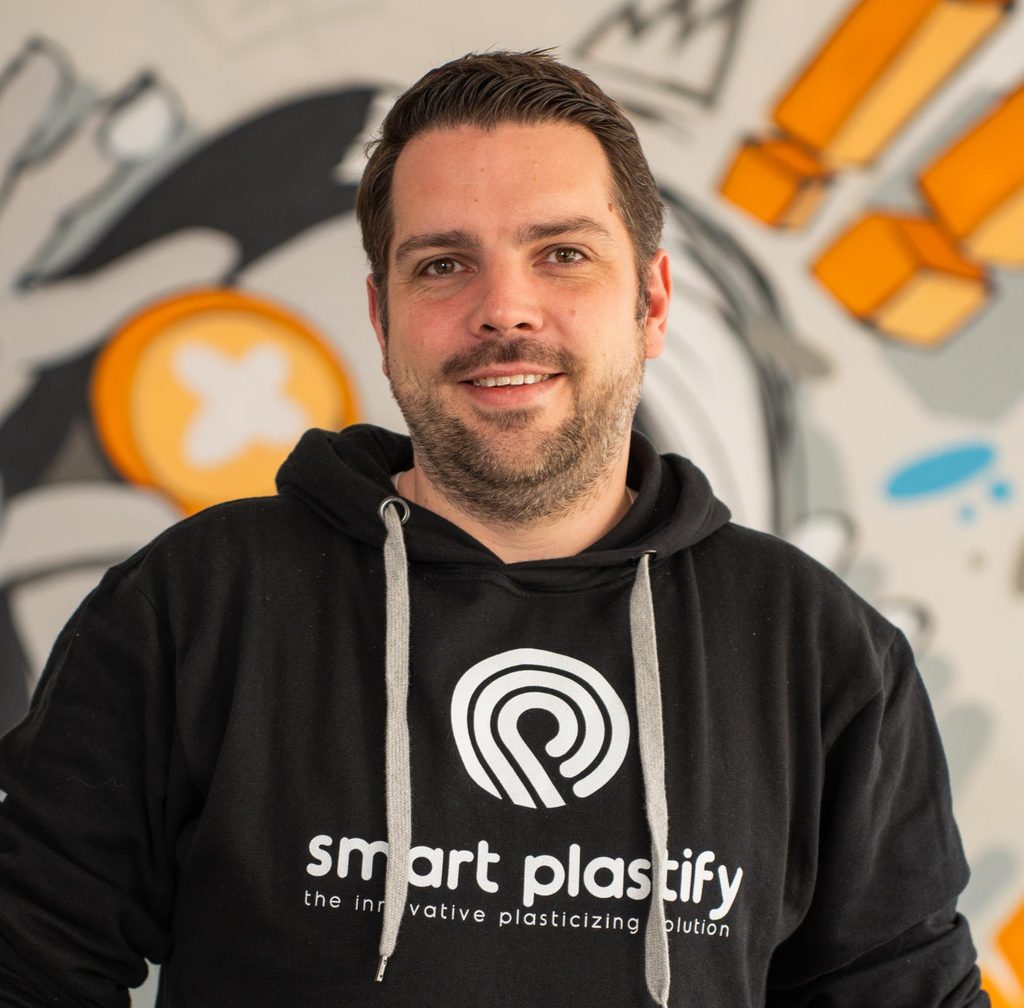
    Smart Plastify is developing an internally heated plasticizing screw that fundamentally transforms the melting process in injection molding machines. While today’s state-of-the-art technology is still based on a patent from 1933 and describes externally heated plasticizing cylinders, Smart Plastify relies on additional heat input via the internal plasticizing screw. This patented technology enables more homogeneous and material-friendly melting, reduces energy consumption and mechanical stress, and simultaneously increases the process’s efficiency. Designed as a retrofit solution, the technology can also be installed in existing machines. Smart Plastify offers an innovative solution for a sustainable plastics industry that combines energy efficiency, resource conservation, and the circular economy.

  • Skellium

    Team

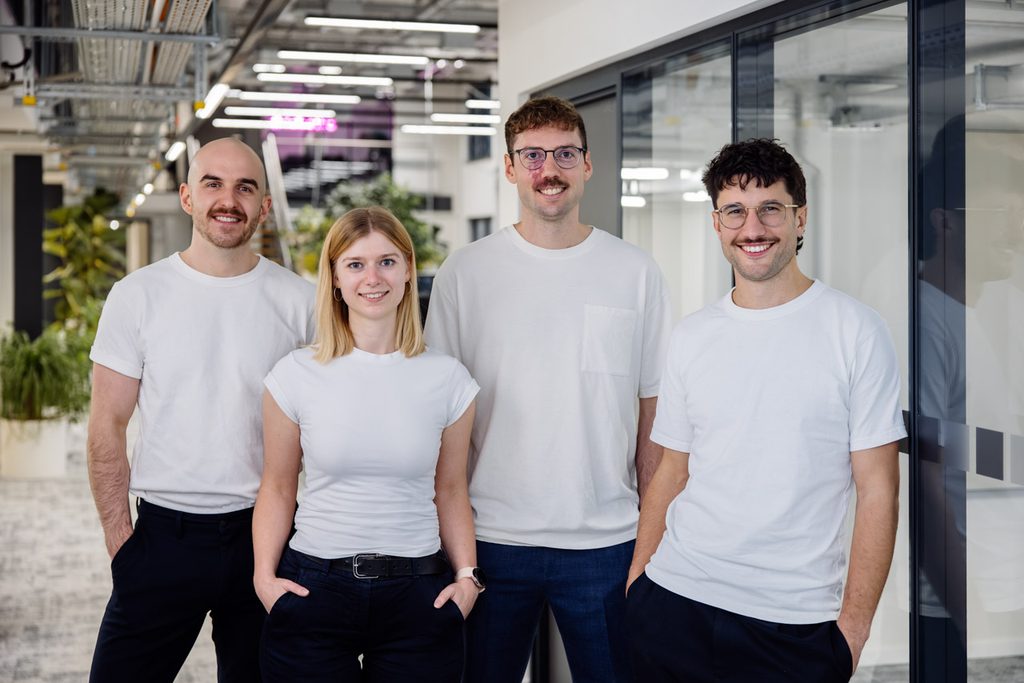
    Skellium has developed an innovative liquid coating process that enables the production of ultra-thin lithium-metal anodes on an industrial scale for the first time. Lithium-metal anodes have an energy density up to ten times higher than graphite and are considered a key technology for the next generation of batteries. Skellium combines scalable roll-to-roll manufacturing with precise thin-film deposition, reducing costs and material waste while enabling mass production. This results in higher-performance batteries for electric mobility, aviation, and shipping, while also reducing the European battery industry’s dependence on Chinese supply chains.

  • PIXIE

    Team

    PIXIE is a spin-off of the Fraunhofer Institute for Laser Technology ILT and is developing a patented planar galvanometer scanner (PGS) for laser material processing. The technology combines mirrors and a Lorentz force drive in a highly integrated, compact rotor unit, thereby directing laser beams across workpieces significantly faster, more easily, and more precisely than conventional scanners—in applications where the size and inertia of today’s systems hinder the parallelization of high-power laser processes. This opens up new applications for scaling industrial laser processes, such as in additive manufacturing and micro-machining, where throughput and precision are critical. PIXIE thus offers a solution for more compact, faster laser optics—a key to more productive high-power laser manufacturing.

  • Mechanolution

    Team

    Mechanolution develops mechanochemical synthesis processes that drive chemical reactions using mechanical energy rather than solvents. The technology enables the solvent-free, cost-effective, and resource-efficient production of active ingredients—in areas where traditional chemical synthesis is resource-intensive and harmful to the environment. This opens up new possibilities for sustainable active ingredient production, for example in the cosmetics and pharmaceutical industries, where environmental impact and cost efficiency are becoming increasingly critical. Mechanolution thus offers a solution for green, solvent-free active ingredient synthesis—a key to a more sustainable chemical industry.

  • Gaia Isotopic

    Team

    Gaia Isotopic is an EXIST-funded deep-tech company at TU Dortmund University. Its photonic sensor platform provides a holistic view of cellular metabolism in real time. For the first time, freely selectable nutrients can be tracked directly and continuously within the metabolism of living cells. While established methods capture only isolated aspects, Gaia Isotopic integrates previously separate levels of analysis and reveals hidden processes and relationships. This leads to a deeper understanding of the underlying cellular processes, opening up new possibilities for biomedical research and drug discovery. At the same time, Gaia Isotopic is developing the sensor platform into a scalable product for a growing life sciences market. The goal is to establish a new standard for the analysis of dynamic metabolic processes.

  • Di.monta

    Team

    di.monta is a spin-off of the Institute for Gear Technology, Machine Dynamics, and Robotics (IGMR) at RWTH Aachen University and develops intelligent robotics for automated disassembly. Conventional automation is designed for predefined product models and conditions and fails when faced with the product variability and unexpected deviations that occur during disassembly.

    di.monta therefore combines traditional automation with artificial intelligence. Intelligent robot capabilities developed in-house (di.skills) detect product models, conditions, and deviations, enabling a flexible response. Orchestrated within the standardized di.core framework and deployed in product-family-specific robot cells, they enable intelligent and adaptive disassembly, thereby facilitating the scalable recovery of valuable components and materials.

  • DelphiCore

    Team

    DelphiCore is developing a technology that allows sensors to be embedded directly into components made of high-performance materials during the manufacturing process. This automated embedding is combined with a patented calibration method and an end-to-end measurement chain. This enables sensors to be integrated precisely and reproducibly and material data to be reliably captured.

    As a result, the component itself becomes a data source. Its condition can be recorded and documented during manufacturing and monitored throughout its lifecycle. This makes stresses and changes in the material measurable and allows them to be utilized for development, testing, and future applications.

    DelphiCore combines materials science, sensor technology, and automated manufacturing, thereby laying the foundation for a new generation of intelligent, sensor-equipped components.

  • Carbon4 Value (C4Value)

    C4Value is a spin-off of the Max Planck Institute for Chemical Energy Conversion and is developing a catalytic process that cost-effectively converts bioethanol or bioacetaldehyde into high-purity acetoin. In the future, this bio-based platform chemical can serve as a starting material for butadiene, butenes, and 2,3-butanediol—in applications where the conventional fermentative production of acetoin has so far been too expensive for industrial use. This opens up new prospects for a climate-friendly C4 value chain, for example in the tire, pharmaceutical, and adhesives industries, where CO₂ reduction and renewable raw materials are crucial. C4Value thus offers a solution for fossil-free platform chemicals—a key to a greener chemical industry.

  • ARQUE Systems

    ARQUE Systems is developing a highly scalable qubit architecture for the next generation of quantum computers. The technology utilizes electron spins in silicon and builds on established semiconductor manufacturing processes, enabling the creation of millions of qubits on a single chip—where today’s quantum computers reach their scaling limits. This opens up new possibilities for fault-tolerant quantum computing, for example in chemistry, materials research, and optimization, where computing power beyond that of classical computers is crucial. The combination of proven semiconductor technology and expertise in quantum physics makes ARQUE Systems industrially viable and economically scalable. ARQUE Systems thus offers a solution for the transition from quantum research to practical systems—a key to Europe’s technological sovereignty in quantum computing.

  • aerotill

    Team

    aerotill is developing a patent-pending air lubrication technology for tillage equipment that reduces the required traction by up to 40 percent. By strategically introducing air into the soil during tillage, friction losses are significantly reduced—in areas where conventional tillage equipment results in high diesel and operating costs. This opens up new possibilities for resource-efficient soil tillage—such as lower fuel consumption, reduced machine wear, and shorter tillage times—where economic efficiency and sustainability are crucial in agriculture. The combination of easy retrofitting and significant efficiency gains makes aerotill practical for farmers of all farm sizes. aerotill thus offers a solution for more efficient soil tillage—a key to more sustainable and economically viable agriculture.