Kategorie: Batch #8

  • DynamoBot GmbH

    Team
    ,

    DynamoBot is a spin-off from the University of Bonn and develops AI and robotics systems for plant-specific weed control. The technology recognizes individual plants in real time and controls the appropriate intervention—mechanical, chemical, or electrical—instead of treating entire areas indiscriminately. This opens up new applications for precise weed management, such as spray retrofitting in conventional agriculture (WeSee) or weeding services in organic farming (WeWeed), where costs, soil conservation, and labor shortages are critical factors. The combination of computer vision, patent-pending multi-head technology, and local data storage makes the system efficient and practical. DynamoBot thus reduces herbicide use and manual labor—a key to more resilient agricultural systems.

  • LipoFluddy

    Team
    ,

    Lipo-FLUDDY is a transfer project from the University of Cologne that develops dual-fluorescence dyes that make lipophagy measurable in living cells. The dye works in microscopy, flow cytometry, and plate readers—where lipophagy has often only been measured indirectly until now. This enables high-throughput screening for active substances against lipid metabolism disorders, such as fatty liver disease, where scalability, comparability, and quantification are important. The combination of pH-switchable and pH-stable fluorophores makes the method protein label-free and compatible with common laboratory platforms. Lipo-FLUDDY thus closes a measurement gap in cell biology – a key to faster, data-driven drug development for metabolic diseases.

  • Medirion

    Team
    ,

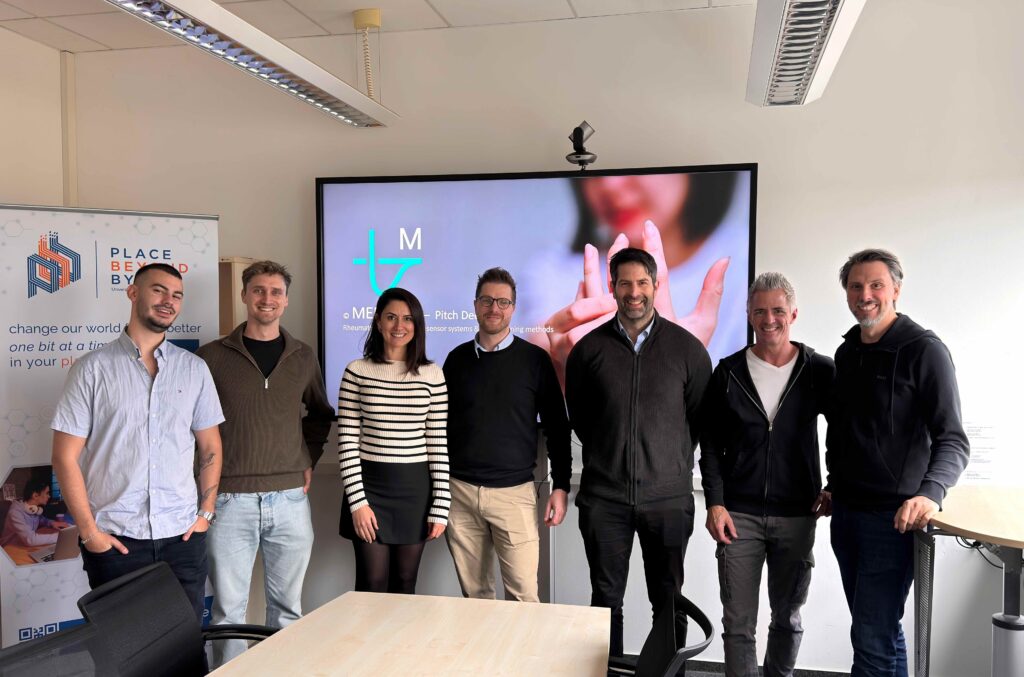
    Medirion is a medtech startup based in Duisburg that is developing AI-supported thermography for the early detection of rheumatoid arthritis based on hand temperature. In about five minutes, a non-invasive individual temperature “fingerprint” is created, which algorithms evaluate – where early signs of inflammation are otherwise easily overlooked. Medirion aims to enable measurements within two weeks in order to meet the 2-week to 3-month window in which early therapy enables remission rates of over 70%. The combination of standardized measurement, machine learning, and strict hygiene/safety standards makes the approach practical. Medirion thus offers a solution for faster rheumatism diagnosis—a key to better patient outcomes and relieved healthcare structures.

  • PartikelART Solution GmbH

    ,

    PartikelART Solution is a startup based in Dortmund that develops digital solutions for “technical cleanliness” in industry—in other words, for the rapid detection and evaluation of particle contamination along the supply chain. The technology analyzes particles in a very short time and translates measurement data into concrete recommendations for more stable processes and better quality – where classic laboratory workflows are often too slow and difficult to compare. This opens up new applications for continuous particle monitoring, for example through VDA-compliant analyses and the systematic identification of particle sources, where time, reproducibility, and location comparability are crucial. In addition, the PartikelLens app enables mobile measurement of photographed particles via smartphone – as a practical bridge between the shop floor and QM. PartikelART Solution thus offers a solution for robust clean manufacturing in increasingly complex products – a key to stable quality in global supply chains.

  • PoLightFilters

    Team
    ,

    PoLightFilters is an EXIST research transfer project at the University of Cologne that develops angle-stable thin-film optical filters for precise imaging and sensor systems. Unlike conventional interference filters, whose spectrum “wanders” when light strikes at an angle, thereby limiting image quality and field of view, spectral transmission remains stable over large angles of incidence—made possible by strong light-matter coupling in thin organic layers and resonator structures. This opens up new applications for LiDAR, fluorescence microscopy, and industrial monitoring, where range, accuracy, and reproducible measurements over a wide field of view are crucial. The combination of customized filter design, materials science innovations, and proven manufacturability makes the technology OEM-ready and scalable; pilot projects with initial partners are in preparation. PoLightFilters thus offers a solution for reliable spectral filtering without angular compromises—a key to robust optics in automation, diagnostics, and sensor technology.

  • Pulse of Production

    Team
    ,

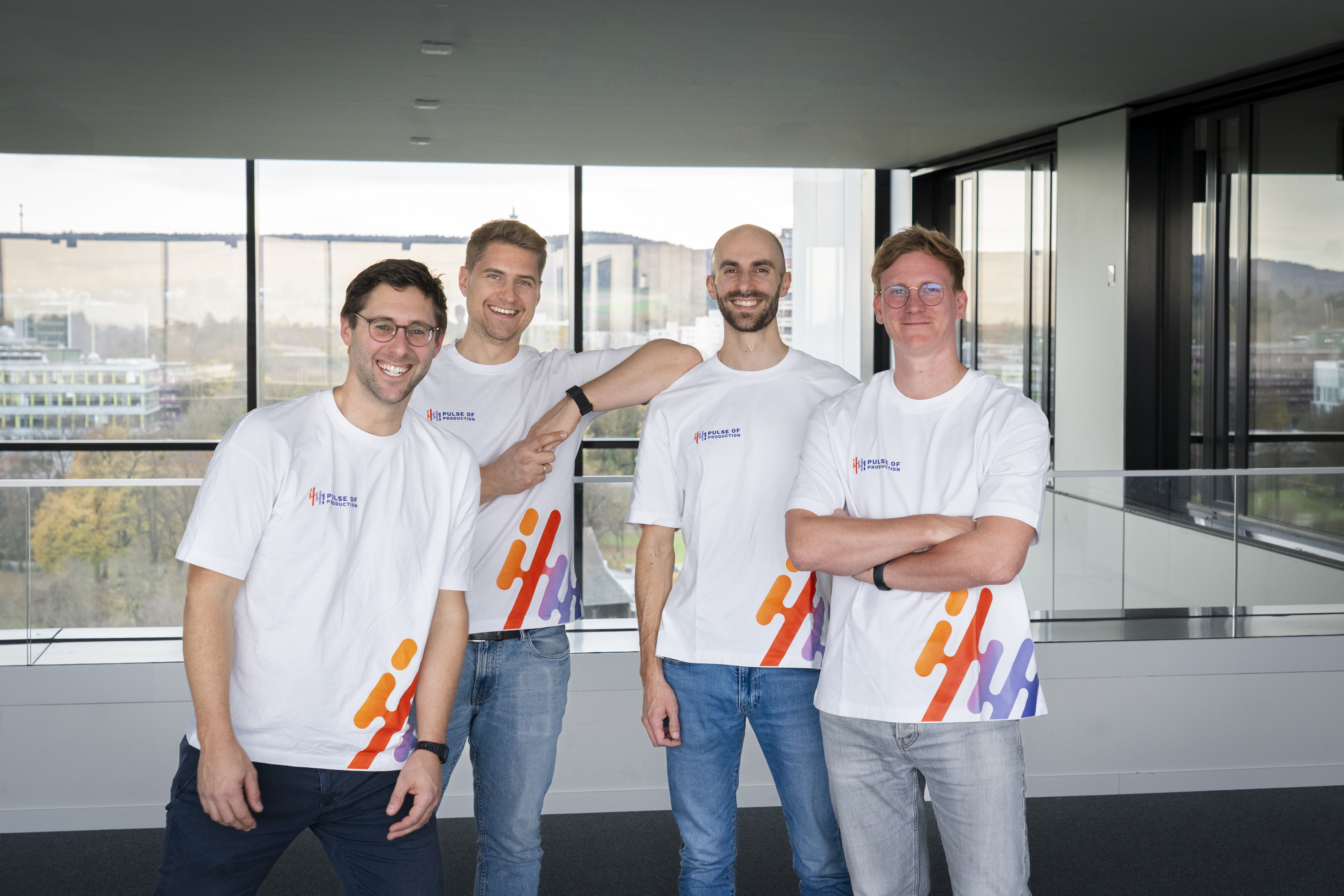
    Pulse of Production is a transfer team affiliated with RWTH Aachen University that is developing the “Pulse Watcher,” a solution for more efficient maintenance of tools in sheet metal forming processes such as punching and fine blanking. The technology combines structure-borne sound measurements with artificial intelligence to monitor tool wear and process stability in real time and determine the optimal maintenance time—where traditional approaches often detect changes too late. Precise signal preprocessing extracts relevant process signatures from the measurement data, making even early changes in condition visible. This reduces unplanned downtime and scrap – a key lever for stable, cost-efficient series production. Pulse of Production thus offers a solution for predictive maintenance in forming technology – a key to more resilient, efficient production.

  • Telerion Robotics

    Team
    ,

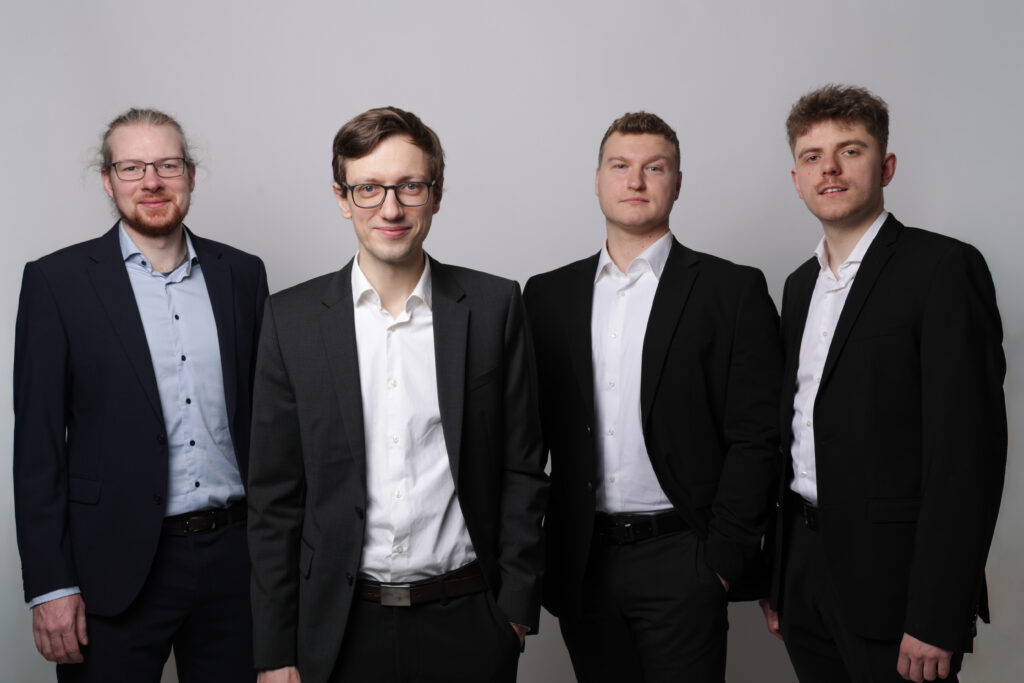
    Telerion Robotics is a robotics team affiliated with the University of Bonn (Project NimbRo) that develops telepresence avatar robots that “transport” people to remote locations via the Internet. The platform connects a mobile avatar unit with a holonomic base, humanoid upper body, and two arms with five-fingered hands to an operator station consisting of a VR headset and exoskeletons with force and haptic feedback, enabling remote manipulation and interaction. At the ANA Avatar XPRIZE finals in Long Beach on November 5, 2022, the team won the Grand Prize of over $5 million; tasks such as making coffee and measuring vital signs were demonstrated. Telerion Robotics thus enables teleoperation when presence is risky, expensive, or impossible – a key for maintenance, assistance, and crisis response.

  • TERNAfil

    Team
    ,

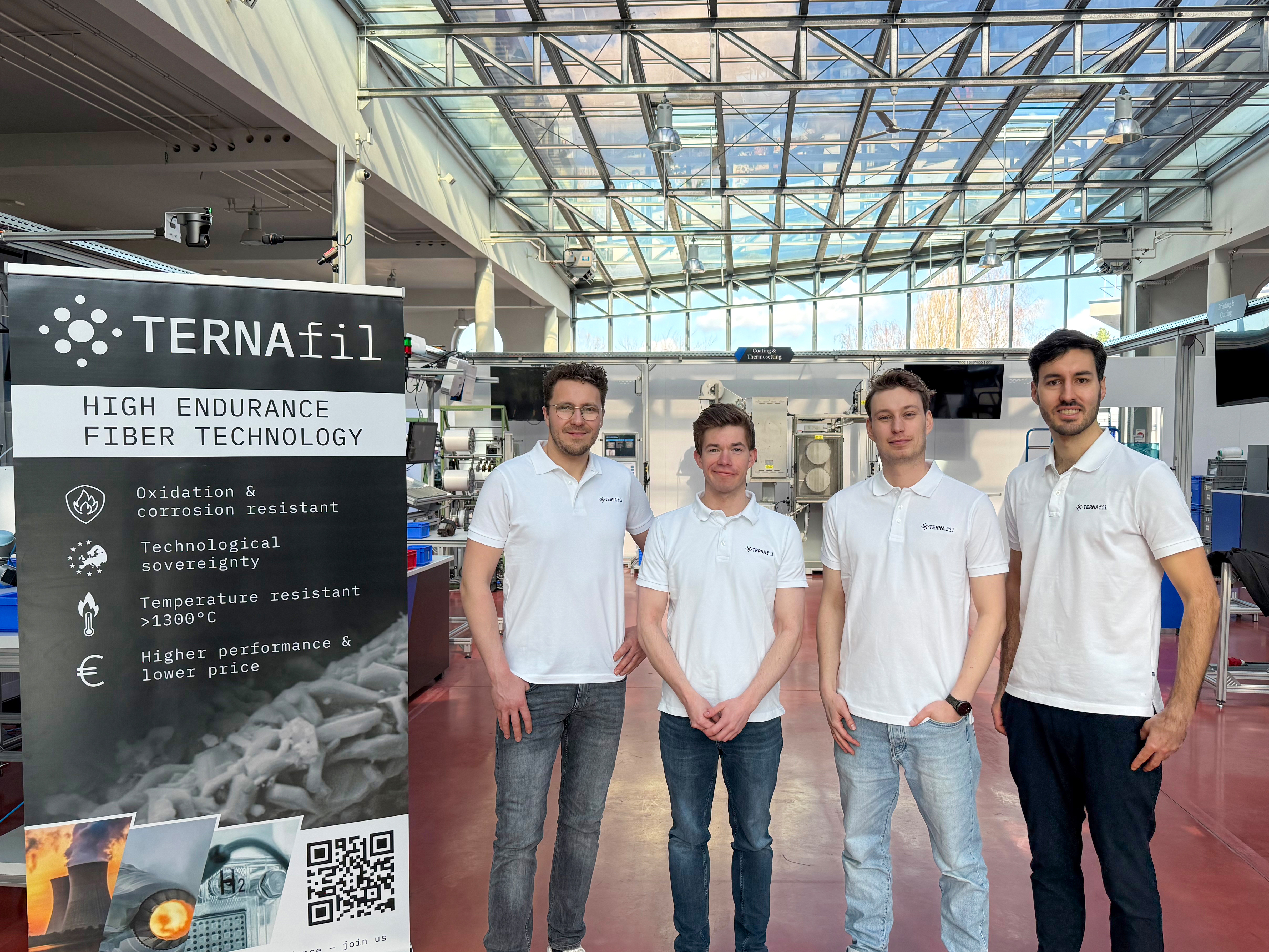
    TERNAfil is a planned spin-off from RWTH Aachen University, initiated by an interdisciplinary team with roots in the Institute of Textile Technology (ITA) and the Institute of Mineral Processing (GHI), and develops highly resistant fiber materials for extreme operating conditions. The metal-ceramic hybrid fiber MAXCarbon combines the robustness of ceramic materials with the mechanical performance of carbon fibers, combining electrical conductivity with high temperature and corrosion resistance. This means that applications remain functional even where conventional technical fibers lose stability above approx. 400 °C – up to high temperature ranges above 1000 °C and aggressive environments. This opens up new fields of application in energy, aerospace, and communications technologies, for example as membranes or electrodes, as hot gas components, or as radiation-resistant antennas. The combination of scalable fiber technology and the absence of rare earths makes MAXCarbon powerful and resource-efficient. TERNAfil thus offers a material basis for robust functionality in harsh environments – a key to future-proof high-performance infrastructures.

  • TrainOs GmbH

    ,

    Trainos is a medtech startup based in Paderborn, Germany, that has developed Trainos PRO, a radiation-free surgical simulator for image-guided procedures. The technology generates realistic X-ray views in real time—without ionizing radiation—and combines them with mixed reality elements and haptic, pathological training models (Trainos Matrices) so that surgeons can practice with standard instruments as they would in the operating room. This addresses a key bottleneck in surgical training, where traditional C-arm training is limited by regulations, radiation exposure, and the scarcity of cadaver material. At the same time, it creates safe, repeatable, and data-rich imaging setups that are also relevant for the development and validation of AI workflows in medical imaging. The combination of radiation-free rendering, scalable anatomical models, and turnkey lab setup makes Trainos the training infrastructure for clinics and medtech partners—a key to faster learning curves and better outcomes.

  • Vehicle SoundLab GmbH

    Team
    ,

    Vehicle SoundLab is an acoustic startup based in Dortmund, Germany, that develops sound solutions for electric vehicles and acoustically demanding machines and products. The technology combines classic NVH analysis with digital signal processing and embedded software to specifically design interior and exterior sounds and reduce unwanted noise and vibrations. This enables applications such as brand-specific active sound design, active noise control, and the development of AVAS —including validation for regulatory requirements where safety, approval, and user acceptance are crucial. In addition, Vehicle SoundLab offers customized software tools for analysis and post-processing, as well as sound modules that generate dynamic soundscapes using a wide range of input and application parameters. Vehicle SoundLab thus offers a solution for audibly better, safer, and identity-building products—a key to the acceptance of electrified mobility and high-quality user experiences.