Kategorie: Batch #3

  • Accensors

    Founders from left Ramona Schütte-Kracht and Eike Kottkamp
    ,

    accensors develops and manufactures flat, flexible SMD film sensors that open up numerous new application areas, such as sensor technology for consumables, flexible sensor technology for wearables, and component-specific and design-free sensors. The focus is on physical sensors (temperature, pressure, conductivity, etc.), electrochemical sensors (pH, sodium, potassium, etc.), and biosensors (troponin, hemoglobin, creatinine, etc.). accensors’ target markets include medical technology, biotechnology, and the entire spectrum of Industry 4.0, aviation, automotive, and agriculture.

    Durch HIGH-TECH.NRW konnten wir unser Produkt weiterentwickeln. Mit Hilfe der vielen Kontakte und Mentoren werden wir weiterhin tatkräftig unterstützt. HIGH-TECH.NRW ist und war für uns ein absoluter Mehrwert und eine große Hilfe in der Start-up-Szene!

    Ramona Schütte-Kracht

  • CRCL

    Gründer Lauritz Schmidt
    ,

    Out of the 92 million tons of textile waste generated worldwide each year, 87% is either landfilled or incinerated, placing an enormous burden on the environment and significantly contributing to global warming. The founders of CRCL have developed an innovative process that transforms textile waste and plastic waste into a resource-efficient and circular granulate called Apatura. This granulate is a truly viable alternative to virgin plastic, both economically and ecologically. It opens up a wide range of applications, for example in the furniture industry for the production of high-quality and sustainable interior products.

  • Deeplify

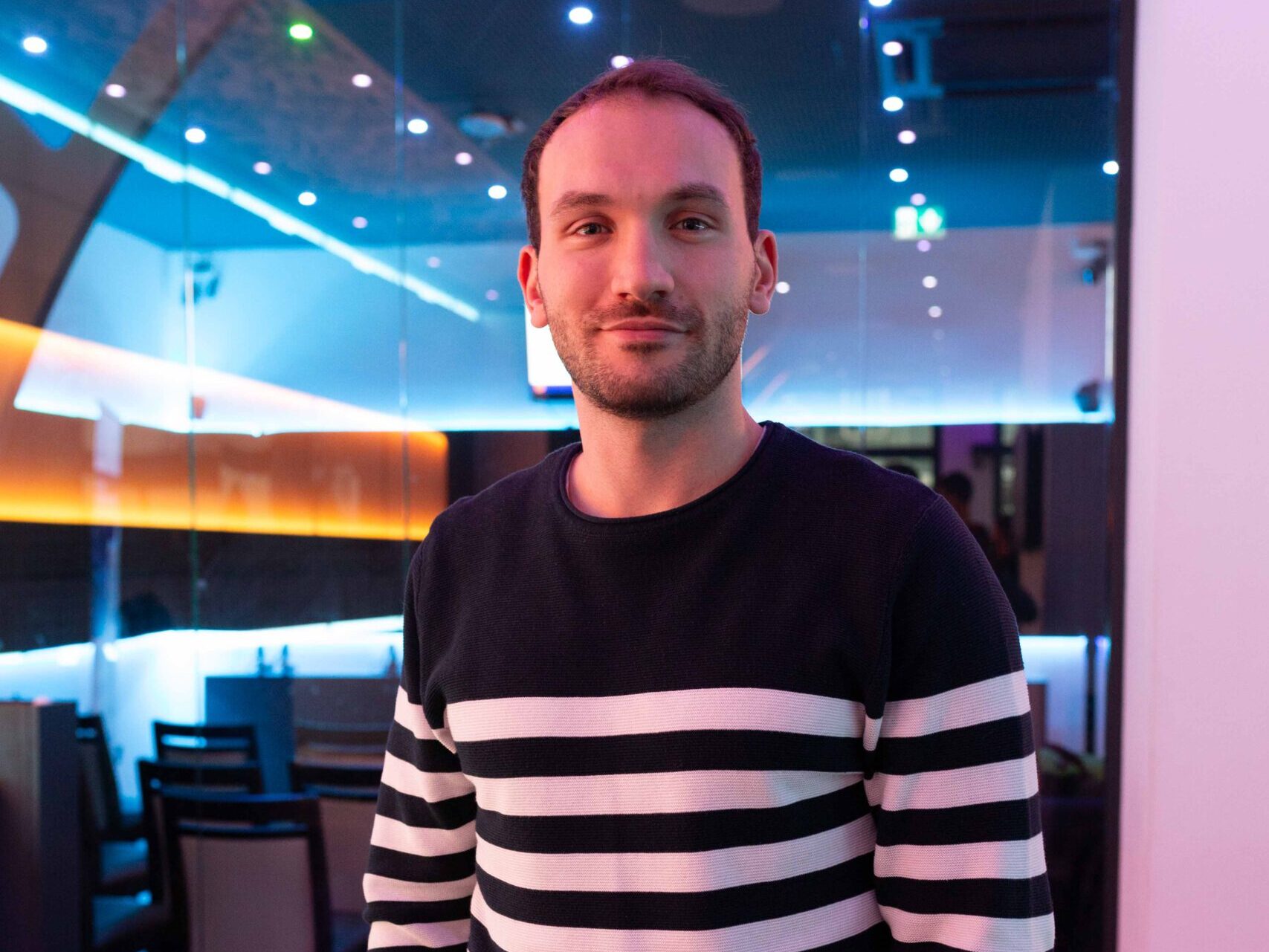
    Founder Jan Löwer
    ,

    deeplify specializes in computer vision and artificial intelligence, developing customized algorithms used by industrial companies in the field of non-destructive testing (NDT) to support the automation of inspection processes. NDT is applied across many industries, with test results typically being interpreted “manually” in a time-consuming process. The algorithms developed by deeplify are based on deep learning architectures and enable not only the detection of anomalies and defects but also more precise and faster defect characterization compared to trained quality inspectors. deeplify focuses on the data analysis of complex testing methods such as magnetic particle inspection or ultrasonic testing, integrating them into a user-friendly platform that allows the inspection process to be managed and carried out autonomously. The primary target industries are manufacturing, with later expansion into oil and gas, energy, and aerospace.

  • FloodWaive

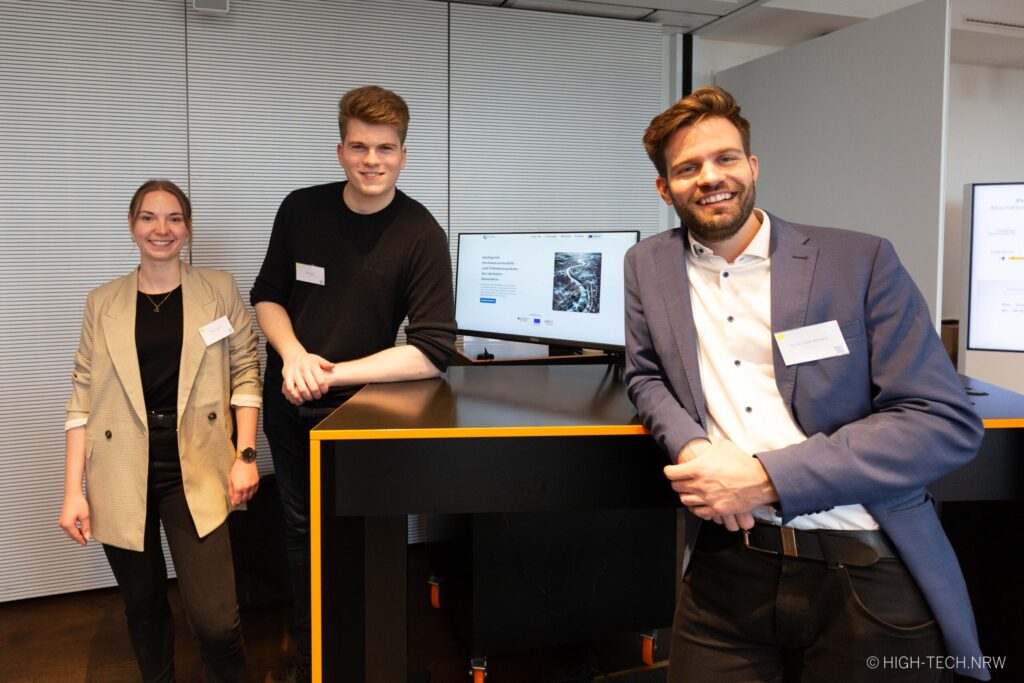
    Founders from left Maike Kuchem, Adrian Holt and Dr.-Ing. Julian Hofmann
    ,

    FloodWaive’s business concept addresses early warning and real-time risk analysis of heavy rainfall and flood events. FloodWaive has developed a highly innovative algorithm that uses deep learning and transformer models to accelerate flood and inundation forecasting processes (e.g., for flash floods or dam failures) by up to a factor of one million, thereby overcoming the inherent computational time limitations of current flood models. For the first time, this enables comprehensive risk analyses and the evaluation of mitigation measures to be carried out within a very short time, as well as dynamic flood forecasts for entire districts and countries.

  • FOX Composites

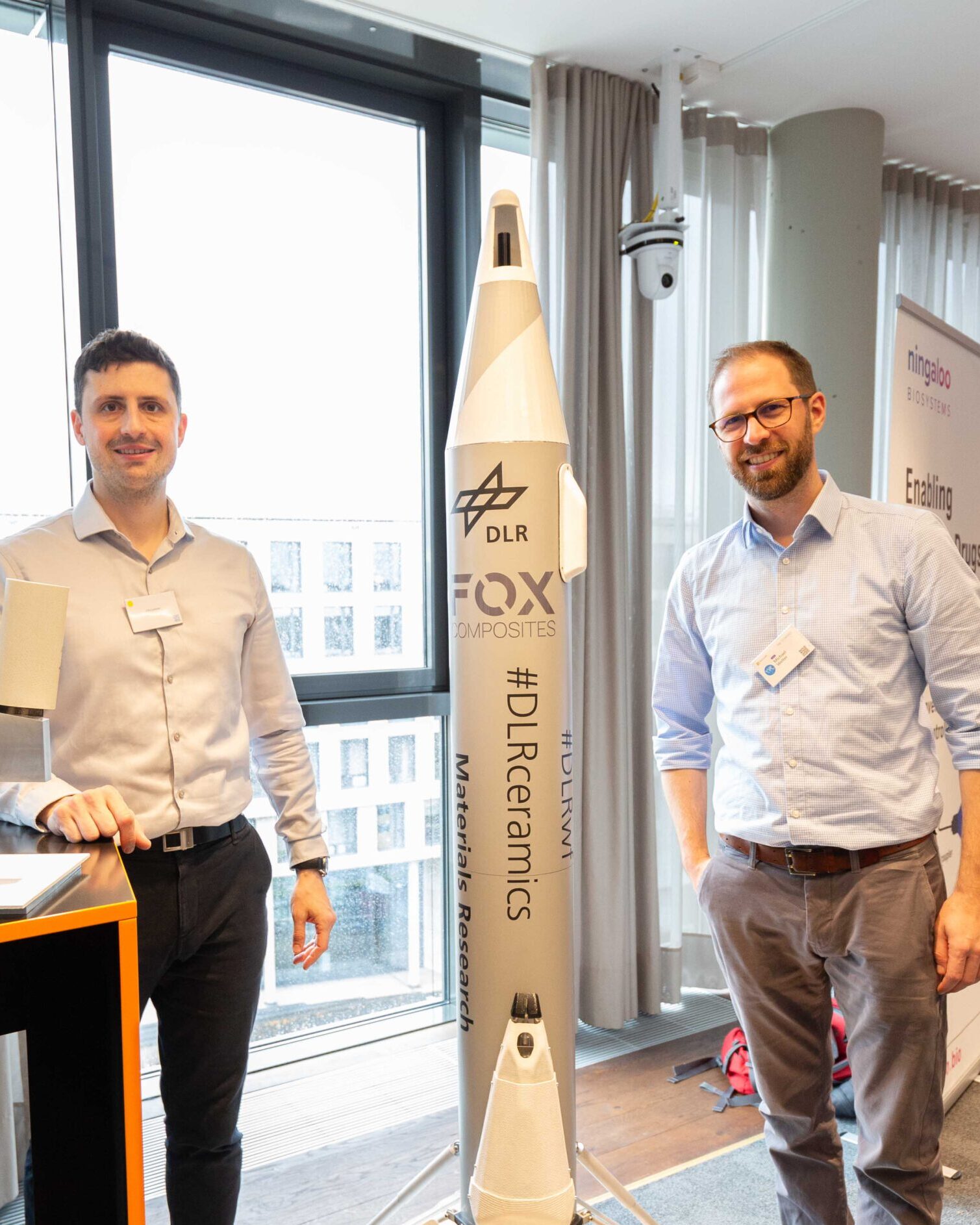
    Founders from left Dr. Vito Leisner und Michael Welter
    ,

    Addressing global challenges such as emission-free aviation, the energy transition, and the decarbonization of industry requires, among other things, new material solutions—particularly in the field of high-temperature lightweight construction. Ceramic matrix composites (CMCs), with their superior temperature resistance and low weight, offer ideal alternatives to metals and carbon fiber–reinforced plastics (CFRP). One of the main reasons why this class of materials has so far struggled to move from research into widespread industrial application is the lack of adequate manufacturing technologies. The DLR spin-off project FOX Composites has therefore developed a novel manufacturing process that, for the first time, enables the reproducible, automatable, and scalable production of CMC components. This paves the way for broad industrial use. Key application areas are found particularly in high-temperature lightweight construction, such as in renewable energy generation, the aviation industry, defense technology, and especially the chemical industry.

    Für uns von FOX Composites war es der erste Accelerator und wir könnten uns keinen besseren ausgesucht haben. Die unglaublich lehrreichen Expertentalks zu allen relevanten Themen für Start-Ups, das tolle Team hinter dem Programm und vor allem das nachhaltige, große Netzwerk waren für uns die größten Benefits. Der Demo Day war ein tolles Finale und für uns ein richtiger Booster.

    Dr. Vito Leisner

  • INDUVOS

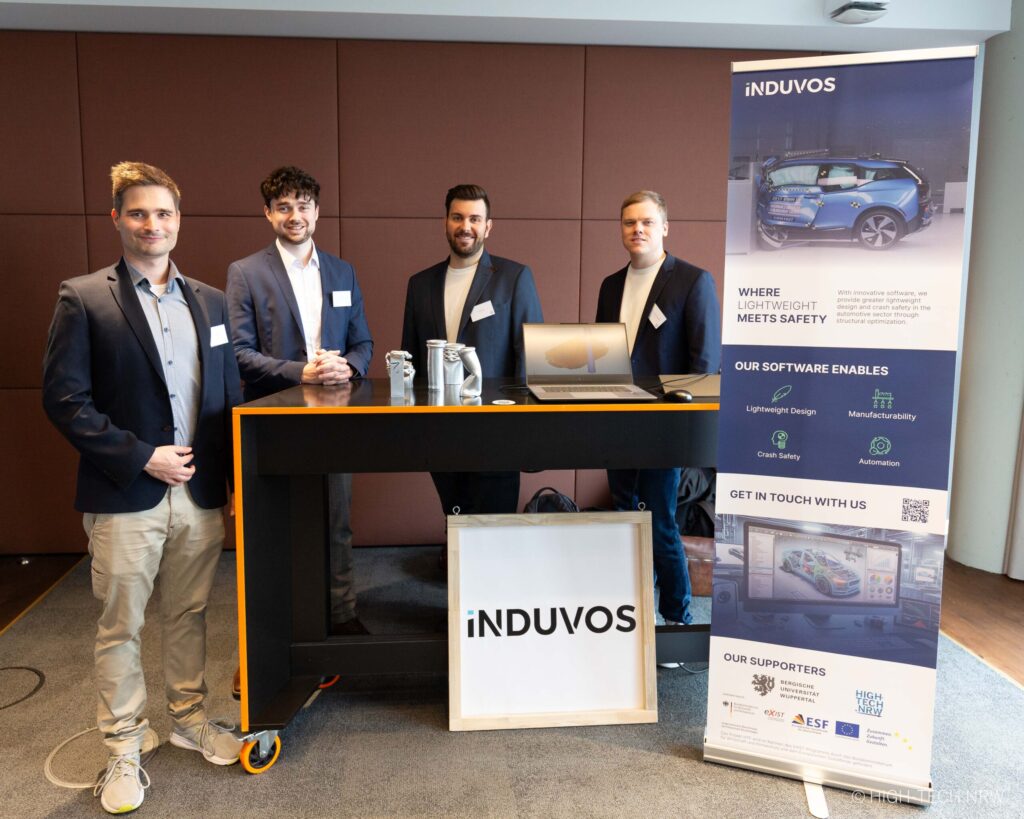
    Founders from Left Florian Beyer, Gerrit Schmidt, Simon Link und Dr.-Ing. Dominik Schneider
    ,

    The protection of people is the highest priority in road traffic. Automotive manufacturers are facing the ever-growing challenge of making vehicles safer, while at the same time meeting increasing demands in the field of electromobility—particularly with regard to battery protection. In this complex environment, Induvos’ innovative software solution offers a decisive competitive advantage. The software developed by the Wuppertal-based team at Induvos uses expert knowledge–based algorithms to analyze vehicle deformation during virtual crash simulations and, based on this, suggest geometric improvements to vehicle structures. In this way, it becomes possible to design safer and lighter vehicle structures, with special consideration given to manufacturability in mass-production processes, while simultaneously reducing energy consumption and CO₂ emissions in road traffic.

    Das Programm ist eine Quelle der Unterstützung für Start-ups, sowohl in der Gründungsphase als auch darüber hinaus. Die Expertentalks bieten eine Fülle von wertvollen Informationen und eine Vielzahl von Ansprechpartnern. Das große Netzwerk, das Engagement und die Expertise des HIGH-TECH.NRW Teams machen den Unterschied. Wir können HIGH-TECH.NRW ohne zu zögern weiterempfehlen!

    Florian Beyer

  • KINEMO

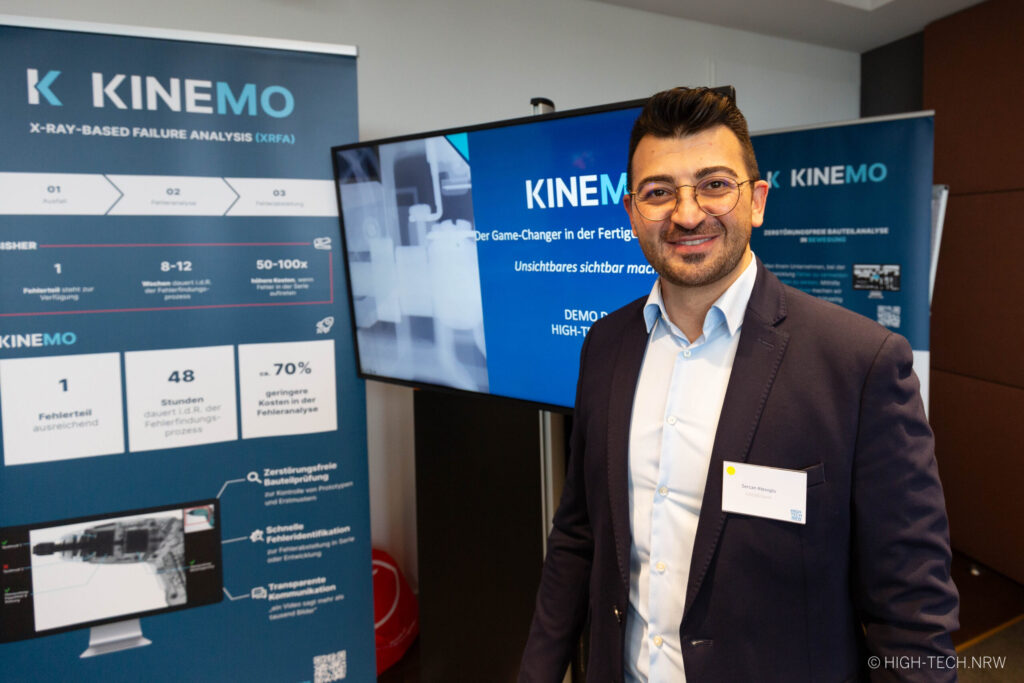
    Founder Sercan Atesoglu
    ,

    KINEMO stands for Kinematics & Motion and provides services in the field of X-ray-based component analysis within the troubleshooting process. Based on video X-ray analysis, internal movements of physical products can be visualized non-destructively. This makes it possible to transparently display and analyze hidden product information—such as functional failures or acoustic issues—during prototype development or series production. Troubleshooting, which can conventionally take up to 12 weeks or longer, is reduced to just 48 hours using KINEMO’s method. This results in significant savings in labor and quality-related costs.

  • ningaloo biosystems GmbH

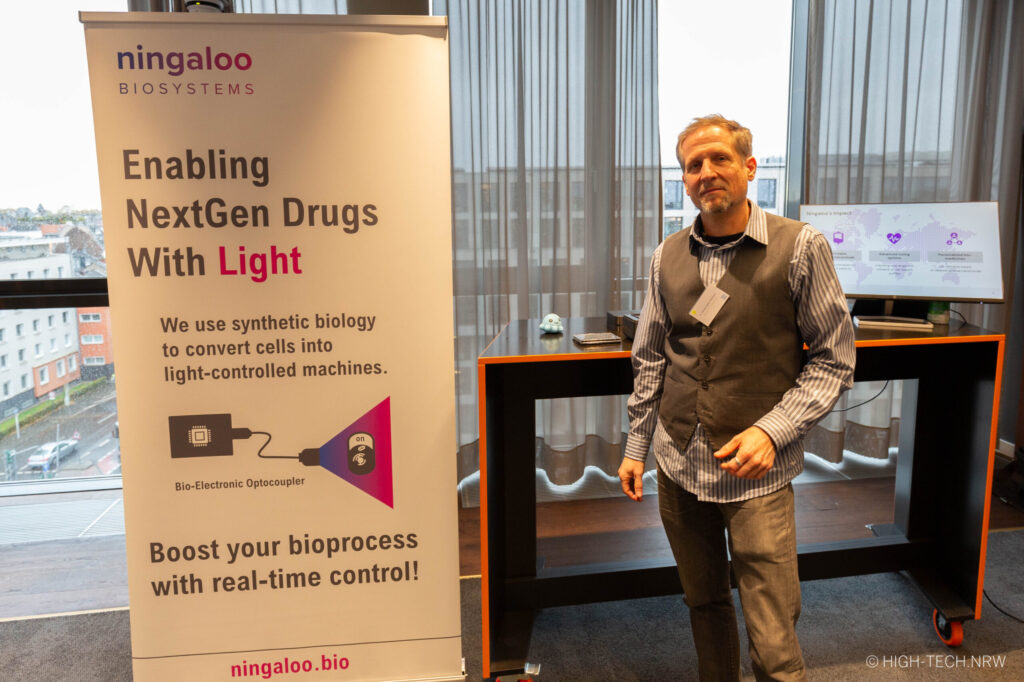
    Founder Dr. Herbert Müller-Hartmann
    ,

    Many newly developed drugs for cancer and autoimmune diseases are extremely expensive to produce. This is mainly due to the fact that the processes—especially in the bioreactors where these active ingredients are manufactured—are still highly inefficient. The biotech startup ningaloo biosystems is developing products that enable biopharmaceutical manufacturers to produce more efficiently and in a more standardized way, and to reduce their currently largely prohibitive costs through higher yields. ningaloo biosystems’ platform technology for “opto-bioproduction” is based on insights from optogenetics and, for the first time, makes it possible to control processes in the bioreactor in real time using light. This helps conserve resources and ultimately makes novel biopharmaceuticals affordable for millions of patients.

    Der HIGH-TECH.NRW Accelerator bietet umfassenden Support und Input in den vielen Herausforderung des Deep-Tech Startup-Lebens. Uns haben das Team und der umfassende Austausch mit den anderen Startups besonders bei der Schärfung unserer branchenübergreifenden Außen-Kommunikation geholfen.

    Dr. Herbert Müller-Hartmann

  • Plasma Additive

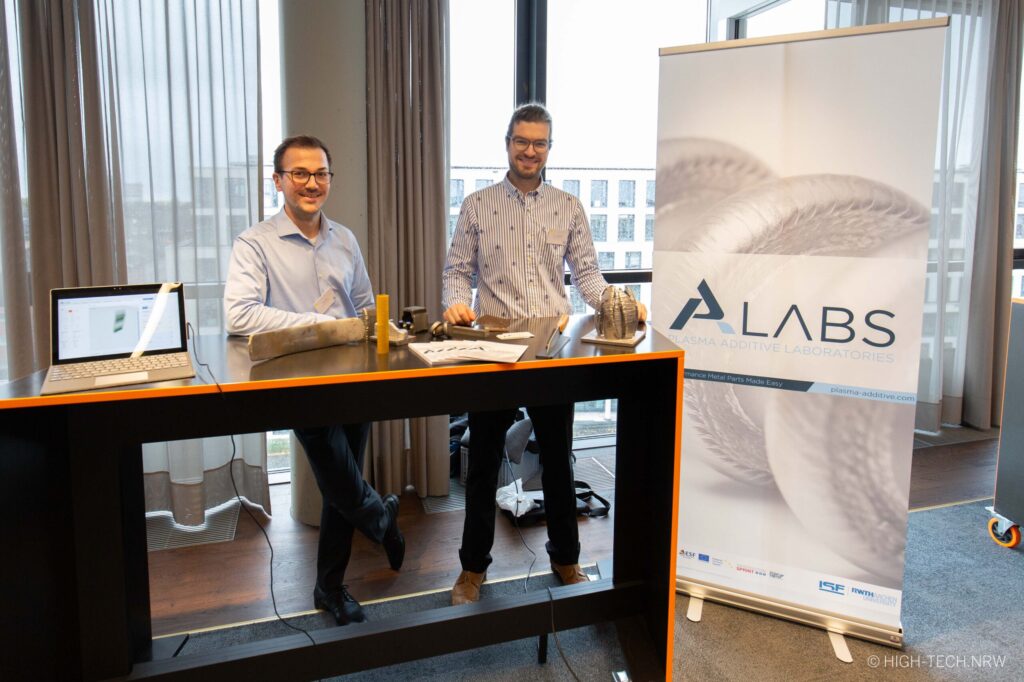
    v.l.: Lukas Oster und Dr.-Ing. Jens Lotte
    ,

    The use of highly productive additive manufacturing processes—particularly the ARC-DED process (arc-based directed energy deposition)—is hindered by the complexity of the process and the required digital process chain. Current automation approaches and software packages struggle to handle this method effectively. The team at Plasma Additive has developed a novel automation and operation approach that results in a highly productive system with easy usability. The operating concept can be simplified into specific product groups, which are directly embedded into the machine control system, thereby maximizing productivity, process reliability, and ease of use. Plasma Additive’s target industries include metal processing, heavy industry, aerospace, agriculture (circular economy for wear parts), and automotive engineering (high-tech multi-material applications).

    Wir schätzen HIGH-TECH.NRW sehr, da es eine herausragende Plattform für innovative Technologien und Forschung in Nordrhein-Westfalen bietet. Die vielfältigen Ressourcen und Unterstützungsmöglichkeiten haben uns dabei geholfen, unser Unternehmensprofil zu schärfen und die Projektidee erfolgreich voranzutreiben. Die inspirierende Gemeinschaft und die gezielte Förderung machen HIGH-TECH.NRW zu einer empfehlenswerten Anlaufstelle für alle, die im Bereich modernster Technologien tätig sind.

    Dr.-Ing. Jens Lotte

  • red cable robots

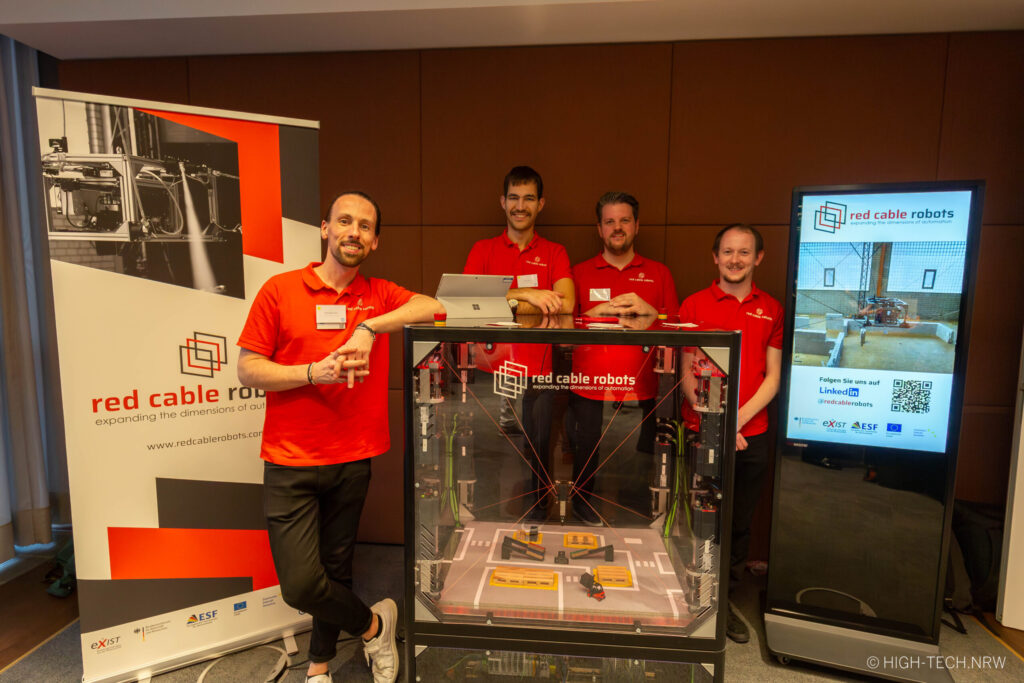
    Founders from left Roland Boumann, Robin Heidel, Tobias Burger und Patrik Lemmen
    ,

    red cable robots develops industrial cable-driven robots for large workspaces and high dynamic performance. Conventional robotic systems are physically limited in their reach and become increasingly expensive and slower as the workspace size grows. As a result, robotic applications in large workspaces, with large workpieces, or with high dynamic requirements are difficult—if not impossible—to implement. Cable-driven robots have only a small moving mass and consist of a platform with an attached robotic tool, which is moved by the coordinated winding and unwinding of connected cables. In this way, the cable robots from red cable robots can efficiently and cost-effectively operate in large workspaces while maintaining high dynamics. Target markets for these cable robots include the construction industry, logistics, and aerospace.

    HIGH-TECH.NRW ist eine Instanz an der man in Punkto Deep-Tech Start-Ups nicht vorbeikommt! 12 Wochen geballtes Wissen, erstklassiges Coaching, großartiges Netzwerk und einzigartige Mentor:innen aus der Wirtschaft. Eine glatte 10/10 für mich.

    Roland Boumann